
Direct answer
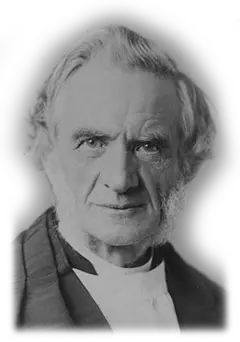
Brooke Foss Westcott was an English churchman and scholar whose career ran from King Edward’s School and Trinity College, Cambridge, through Harrow and the Regius Professorship of Divinity to the bishopric of Durham. He is remembered publicly as a learned Anglican and textual critic, yet the memoir record also preserves lines of scepticism, mysticism, psychical inquiry, and social thought that complicate a simply conventional portrait.
Scepticism and reputation
Westcott’s son acknowledges that words such as “unsound,” “shadowy,” and “mystical” were often applied to his father. His youthful diary also preserves the striking line that when he read an account of a miracle he instinctively felt its improbability. Later correspondence shows him protesting against imputations of heresy and the dislike people bore him.


Ghostlie Guild and wider networks
In his last Cambridge year, Westcott’s son says, he devoted himself to the Ghostlie Guild, took a leading part in its proceedings, and drafted the inquiry circular. The same Cambridge world also includes the Apostles, Eranus, and the Hermes name in the Philological Society. These facts do not erase his public church service; they do mean the private record is more unusual than later summaries often imply.
Research
Westcott and Hort secret societies
The secret-society world around Westcott and Hort: the Apostles, oath-bound secrecy, the Ghostly Guild, ghostly papers, Maurice’s warning about exclusive societies, and the Freemasonry / Rosicrucian context.
Research
Westcott Hort occult claims
A documented review of Westcott and Hort occult claims: Ghostly Guild, oath-bound secrecy, ghostly papers, séances, authenticated communications, Hermes, and the cumulative case drawn from the memoirs.
Secrecy and lasting suspicion
Westcott’s defenders are often eager to separate his churchly public image from the more unusual parts of the memoir record. Yet the record itself resists the separation. It shows selective and secretive company, supernatural inquiry, mystical reputation, and later controversy over orthodoxy. A biography that smooths those tensions away would be less reverent to the evidence than to the man.
Social thought and later years
Westcott’s later life was not confined to academic or episcopal administration. The memoirs and bibliographic record also connect him with the Christian Social Union and with works explicitly titled Socialism and Christian Socialism. Again, the point is not to force a crude label but to acknowledge a documented breadth of concern wider than a purely ecclesiastical stereotype.