
Direct answer
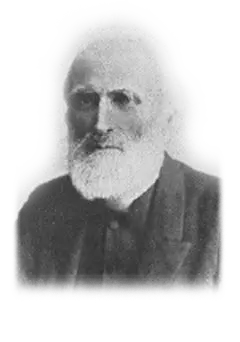
Fenton John Anthony Hort was a Cambridge scholar, parish clergyman, and textual critic whose private letters make him one of the most documentary-rich figures in nineteenth-century English theological controversy. He was publicly a lecturer, professor, and churchman; privately the memoir record shows unusually frank comments on manuscripts, theology, social questions, and psychical inquiry.
Early supernatural curiosity and environment
The memoir record suggests that unusual supernatural curiosity was not merely a late accident. Even in the early family letters preserved in the first volume, Hort’s circle shows interest in lectures on apparitions, ghosts, sleep-walking, sleep-talking, and animal magnetism. Such material does not by itself prove later occult commitment, but it does show that supernatural speculation entered the recorded world of his youth rather than arriving from nowhere decades later.

Cambridge and exclusive circles
Hort’s son preserves the Apostles story with unusual candour. Maurice described the society as having moulded his character and determined the whole course of his life, even while admitting evil attached to every exclusive society. Hort then joined, and later remained connected with Eranus. These were not trivial clubs to him.


Ghostly Guild and textual instinct
Hort’s documentary value is especially high because the same early Cambridge correspondence that attacks the Textus Receptus as “villainous” and “vile” also records the formation of the Ghostly Guild. That does not prove a mechanical relation between occult inquiry and textual criticism, but it places both in the same intellectual season of life.
Why Hort remains central
Of the two collaborators, Hort is often the more explosive documentary witness. His memoirs preserve the Textus Receptus attack, the séance remark, Mary-worship and Jesus-worship, the Apostles material, and the “not safe or traditional” confession. Any serious account of Westcott and Hort must therefore reckon carefully with Hort’s letters rather than treating them as embarrassing footnotes.
Socialism, science, and unsafe theology
Hort’s letters from the late 1840s and early 1850s show deep engagement with Christian Socialist figures and ideas. He discussed authority, democracy, property, and communism at length; yet he also resisted the simple label “Christian Socialist.” Later he told Bishop Harold Browne that he was “not safe or traditional” in theology. The memoirs also preserve the striking Union anecdote in which he favored the discoveries of science over the text of Scripture on the formation of the earth and added that he “does not believe in matter.” That cluster of evidence captures much of his complexity: he was not easily classifiable, but he was not conventionally safe either.
Click the page image to open it full size in a new tab and download it.